Search This Blog

Showing posts with label 2010 honda insight. Show all posts

Monday, March 14, 2011

Gas Prices Go Up Again: What to Do?

With the recent turmoil in the Middle East, we are hit again with aggressive fuel charges. The reality is fuel prices will continue to go up and down, and they will continue to rise. What do you do?

Fuel efficiency needs to come from all ends – manufacturers, dealers and drivers. Honda has been committed to fuel efficiency much longer than most manufacturers. Honda has been named the “Greenest Car Maker” in the U.S. for the past five years.

Everyone is not ready to go to a hybrid, so as a driver what can you do to support your wallet and the planet at the same time?

Here are some tips to help you reduce the amount of gas you use and getting the best gas mileage your car can deliver.

• Drive more efficiently
• Keep your car in shape
• Plan and combine trips
• Choose a more efficient vehicle


DRIVE MORE EFFICIENTLY
Drive Sensibly
Aggressive driving (speeding, rapid acceleration and braking) wastes gas. It can lower your gas mileage by 33 percent at highway speeds and by 5 percent around town. Sensible driving is also safer for you and others, so you may save more than gas money.

Observe the Speed Limit
While each vehicle reaches its optimal fuel economy at a different speed (or range of speeds), gas mileage usually decreases rapidly at speeds above 60 mph. You can assume that each 5 mph you drive over 60 mph is like paying an additional $0.24 per gallon for gas. Observing the speed limit is also safer.

Remove Excess Weight
Avoid keeping unnecessary items in your vehicle, especially heavy ones. An extra 100 pounds in your vehicle could reduce your MPG by up to 2 percent. The reduction is based on the percentage of extra weight relative to the vehicle's weight and affects smaller vehicles more than larger ones.

Avoid Excessive Idling
Idling gets 0 miles per gallon. Cars with larger engines typically waste more gas at idle than do cars with smaller engines.

Use Cruise Control
Using cruise control on the highway helps you maintain a constant speed and, in most cases, will save gas.

Use Overdrive Gears
When you use overdrive gearing, your car's engine speed goes down. This saves gas and reduces engine wear.

KEEP YOUR CAR IN SHAPE
Keep Your Engine Properly Tuned

Fixing a car that is noticeably out of tune or has failed an emissions test can improve its gas mileage by an average of 4 percent, though results vary based on the kind of repair and how well it is done.

Fixing a serious maintenance problem, such as a faulty oxygen sensor, can improve your mileage by as much as 40 percent.

Keep Tires Properly Inflated
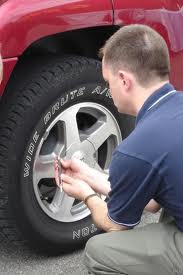
You can improve your gas mileage by up to 3.3 percent by keeping your tires inflated to the proper pressure. Under-inflated tires can lower gas mileage by 0.3 percent for every 1 psi drop in pressure of all four tires. Properly inflated tires are safer and last longer.

The proper tire pressure for your vehicle is usually found on a sticker in the driver's side door jamb or the glove box and in your owner's manual. Do not use the maximum pressure printed on the tire's sidewall.

Use the Recommended Grade of Motor Oil

You can improve your gas mileage by 1–2 percent by using the manufacturer's recommended grade of motor oil. For example, using 10W-30 motor oil in an engine designed to use 5W-30 can lower your gas mileage by 1–2 percent. Using 5W-30 in an engine designed for 5W-20 can lower your gas mileage by 1–1.5 percent. Also, look for motor oil that says "Energy Conserving" on the API performance symbol to be sure it contains friction-reducing additives.

Combining errands into one trip saves you time and money. Several short trips taken from a cold start can use twice as much fuel as a longer multipurpose trip covering the same distance when the engine is warm. Trip planning ensures that traveling is done when the engine is warmed-up and efficient, and it can reduce the distance you travel.

PLAN AND COMBINE TRIPS
Commuting


  • Stagger your work hours to avoid peak rush hours.
  • Drive your most fuel-efficient vehicle.
  • Consider telecommuting (working from home) if your employer permits it.plan-car-trips

Take advantage of carpools and ride-share programs. You can cut your weekly fuel costs in half and save wear on your car if you take turns driving with other commuters. Many urban areas allow vehicles with multiple passengers to use High Occupancy Vehicle (HOV) lanes which are typically less congested, further improving your fuel economy.

Consider using public transit if it is available and convenient for you. The American Public Transit Transportation Association has links to information about public transportation in your state.

Traveling
A roof rack or carrier provides additional cargo space and may allow you to meet your needs with a smaller car. However, a loaded roof rack can decrease your fuel economy by 5 percent. Reduce aerodynamic drag and improve your fuel economy by placing items inside the trunk whenever possible.

Avoid carrying unneeded items, especially heavy ones. An extra 100 lbs in the trunk reduces a typical car's fuel economy by 1-2 percent.

CHOOSE A MORE EFFICIENT VEHICLE

Below is a list of all the new Honda vehicles that, according to the Environmental Protection Agency, cross the magical 30 miles per gallon mark in highway driving.2011-Honda-corolla-image


Honda focuses on fuel efficiency on all its models. Stop by today and we can show you the model that fits your needs for power, performance and fuel efficiency. In addition, we can always help you get the performance and efficiency out of your current Honda. We are your resource for expertise, advice and insight into getting the most out of your Honda.

Your fuel-efficient focused friends at Honda Mall of Georgia

Tuesday, November 30, 2010

Affordability: Honda Insight's edge in 4-door hybrid market


Honda's new-for-2010 Insight hybrid is more than just a next step from the company's original gas-electric car - it's an enormous evolutionary leap.

The original Insight was a two-seat, two-door hatchback, and the new car sharing its name is a larger four-door hatchback, measuring 17.2 inches longer and weighing 876 pounds more. Honda's new Insight is shorter on fuel economy, though, with an estimated city/highway miles per gallon of 40/43 vs. the lightweight oldie's 48/53.

Importantly, the new Insight gives Honda a weapon to battle in a growing market of compact and midsize four-door hybrids such as Toyota's Prius and Camry Hybrid, and Nissan's Altima Hybrid.

The Insight's estimated combined city/highway fuel economy of 41 mpg compares to competitors as follows: Prius, 50 mpg; Camry Hybrid, 33 mpg; Fusion Hybrid, 39 mpg; and Altima Hybrid, 33 mpg.

The Insight's key edge is its price - the only hybrid in its class with an under-$20,000 starting price. It's available in three models: LX, $19,800; EX, $21,300; and EX with Navigation, $23,100. A destination charge of $750 is added to each model.

The test vehicle is the top-line EX with Navigation. Cloaked in Tango Red Pearl paint, the sleek body is eye-catching, but not in the “What-the-heck-is-that?” way as the first Insight. After seeing the Prius' familiar form (which the new Insight's shape somewhat favors) on the road for about a decade, there's nothing shocking about the Insight's shape.

Its large windshield makes a sharp incline and, nearly at the point where the roof and windshield meet, the roof takes a dramatic slope - blending with a huge expanse of hatchback glass.

The glass follows the roof's slant to meet an LED brake-light dividing bar, and then the glass drops to a narrow panel that traverses the rear. This panel is flanked by huge wedge-shaped tail-lamps. The view through the Insight's steep rear glass is satisfactory, but cargo can easily block it - so the height of items toted is limited.

Up front, the Insight's hood slopes into a futuristic-looking snout. A sleek chrome three-bar grille is cradled in a silver-colored yoke, separating it from the blacked-out air dam below. Blending with the yoke and grille, the narrow headlamps wrap to create a winged effect.

Within Insight's creatively sculpted shell is the latest version of Honda's Integrated Motor Assist system. Powering the hybrid is a 1.3-liter i-VTEC four-cylinder gas engine, DC-brushless electric motor/generator and continuously variable transmission. The engine delivers 98 horsepower and 123 pound-feet, and the electric motor's output is 13 horses and 58 pound-feet of torque.

The electric motor teams with the gas engine, assisting it to provide extra muscle as needed. While electric power can drive the Insight up to 30 mph, the IMA system does this with the electric motor connected to the shut-off engine's spinning crankshaft. The electric motor also works as a generator during deceleration and as a starter that spins the engine up to idle speed.

Auto Idle Stop is another key part of the IMA system's fuel-saving engineering. It allows the engine to automatically shut down, depending on environmental conditions and vehicle operation, when the vehicle comes to a stop with brakes applied. The engine also may stop during braking when speed drops below 7 mph.

The system includes a nickel-metal hydride battery pack, which Honda reports is much improved when compared the its Civic sibling's battery. Its advantages are lower cost, reduced weight and a positioning allowing for increased cabin space.

EX models are fitted with steering wheel-mounted paddle shifters. The Insight is adequately quick for city and highway driving, accelerating from 0-60 mph in about 10.9 seconds. Powertrain noise can be heard during hard acceleration, but it's minimal. When stopped on a steep grade there is some roll-back when the brake is released.

Honda gives the driver some control over the IMA system's efficiency via Eco Assist and ECON features. A press on a green dash-mounted ECON button provides a fuel-economy boost by altering vehicle functions - modifying engine performance, increasing regenerative braking (harnesses more battery-charging energy) and creating more temperature fluctuation in the automatic climate control system.

Expanded conditions of idle-stop operation (to reduce fuel use), slower throttle response (except on full throttle) and shorter coasting distances caused by increased regenerative braking are the most obvious performance changes.

The Eco Assist system provides feedback on driving efficiency via a colorful, intense-looking gauge cluster. It trains the driver to operate the vehicle in an eco-efficient manner by three different forms of feedback: real-time driving indicator with an Eco Drive Bar, which indicates if vehicle operation is in efficient braking and driving zones; an appraisal of each trip driven; and a long-term score in which the driver accumulates points and is given increasing steps of recognition.

An IMA Charge/Assist Gauge allows the driver to keep tabs on whether the IMA is assisting the engine or if the battery is being charged.

The Insight's most-used gauge is the Ambient Meter, mounted high, above the main cluster. It provides a clear digital speedometer reading and the background changes color with the efficiency of the driver's style - green for the highest level, blue-green for the mid-level and blue for the least-efficient level.

Aside from this sprinkling of eco gauges, the Insight's cabin layout is simple, with a clean, airy look. The front buckets are firm and have supportive side bolstering. A seat-height adjustment assists in getting the driver seat at an optimal height.

The rear seat is a 60/40-split configuration with scooped-out outboard cushions and an elevated center section. Seatbacks fold to accommodate longer cargo, and loading items is made easy with the large hatchback opening.

Headroom and legroom are generous in the front, but room for passengers in the rear is somewhat tight. Tall adults will find headroom cramped.

Passengers experience ride quality that's on the firm side. Steering responsiveness is relatively quick, and standard Vehicle Stability Assist contributes to driver confidence.

The test vehicle comes standard with an impressive bundle of electronics: Honda Navigation System with voice recognition; Bluetooth hands-free link; digital audio card reader; 160-watt, six-speaker AM/FM/CD with MP3/WMA playback; steering wheel audio controls; USB audio interface; and MP3/auxiliary input jack.

Honda's Insight is a vehicle that's easy to live with. Driver comfort level is high, the navigation system adds convenience and, importantly, fuel stops are far apart.

For the consumer shopping for a hybrid, the Insight's efficient IMA system and lower-than-average price tag makes it a must for a test drive. Come on by and experience it yourself at Honda Mall of Georgia.